


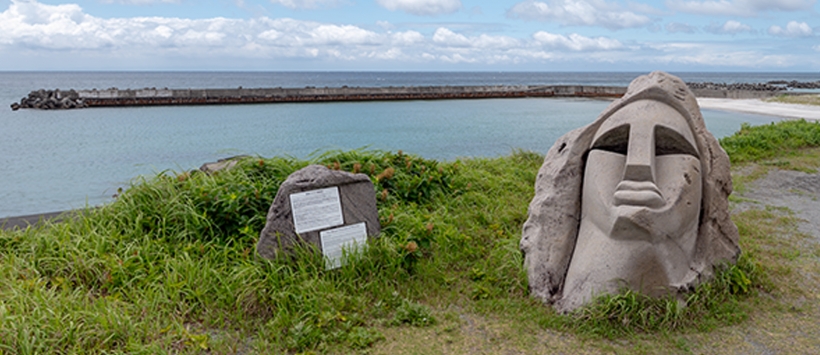
Niijima Village, located in the Izu Islands, is reachable in about two and a half hours by high-speed jet ferry from Tokyo. The Niijima municipality spans over two islands famous for their rich natural environment and beautiful coastline. Niijima Island, in particular, is renowned as a mecca for surfing and attracts numerous tourists throughout the year. How has the introduction of Orwak’s compaction equipment transformed the storage and logistics of recyclables? Let’s explore the waste management challenges remote islands face and the resource circulation initiatives Niijima Village initiates!
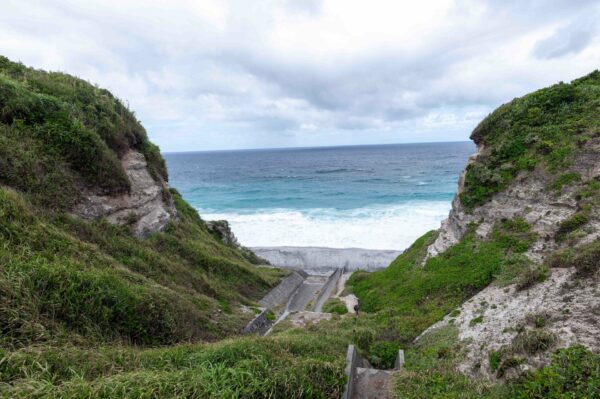
Resource Recycling Challenges on Remote Islands
Niijima Village promotes separate collection and recycling of waste, encouraging residents to cooperate with sorting efforts. While the village collects recyclable items such as cans and PET bottles, it meets challenges distinct from those faced by municipalities on the mainland.
In the past, efforts were made to recycle materials such as paper and newspapers. However, the high cost of sea transport and logistics required to ship these materials to the mainland often exceeded their market value as recyclables, making it impossible to establish a sustainable system.
Currently, the recycling rate in Niijima Village amounts to around 3–5 %. While this level may not be high compared to municipalities on the mainland, remote islands face a unique challenge: transportation costs often outweigh the complexities of the recycling process itself. Consequently, Niijima Village prioritizes balancing environmental impact with economic viability rather than focusing solely on the recycling rate figure.
As for PET bottles, the village asks residents to remove the caps before disposal but does not require them to peel off the labels. The quality standards set by the Japan Containers and Packaging Recycling Association do not significantly penalize bottles with labels attached; as long as the bottles are properly sorted and compacted for transport, they can still be recycled.
Volume Reduction Is Crucial
While Niijima Village currently ships recyclable materials, such as PET bottles, off the island, it previously disposed of a large amount of waste via landfilling in the village. Following the full implementation of the “Law for the Promotion of Sorted Collection and Recycling of Containers and Packaging” in 2000, and amidst growing societal demands for resource circulation, the need to promote the recycling of materials became increasingly urgent for Niijima Village, given its remote location.
However, recyclable materials like PET bottles are bulky; storing or shipping them in their original state not only consumes valuable storage space but also reduces transport efficiency. Since space on transport vessels serving remote islands is limited, efficient shipment of recyclables is essential and that is how compaction solutions came into the picture to address the challenge.
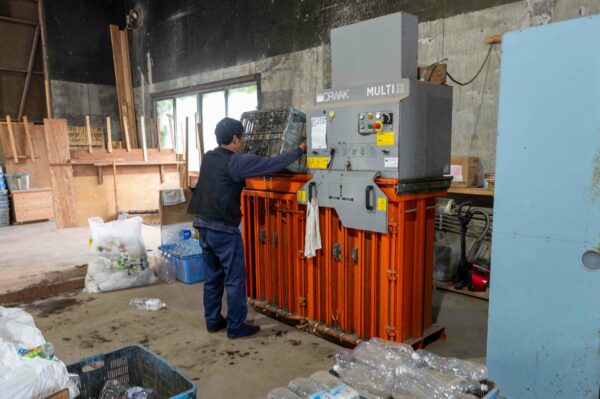
Key priorities when selecting the compaction equipment: stable operation, ease of maintenance, and achieving significant volume reduction. Additionally, since the materials had to be loaded into mesh containers for sea transport, the size and configuration of the bales and their compatibility with existing logistics workflows were also critical factors. The multi-chamber Orwak baler 5070-HDC, introduced by Orwak Japan, checks all those boxes!
Baler Benefits: Improved Storage and Off-Island
Transport Efficiency
The baler provides efficient compaction of PET bottles and cans, leading to effective use of storage space for recyclable materials. On remote islands, where storage space is at a premium, the benefits of volume reduction are substantial.
Furthermore, the ability to consolidate and store recyclable materials in batches has simplified the planning of transport operations. Compaction maximizes the limited transport space and offers a significant advantage for remote islands.
Compared with before the Orwak baler was installed, the process of organizing the waste storage is simplified. Enhanced storage efficiency and the effective use of limited space have contributed to improved on-site operations.
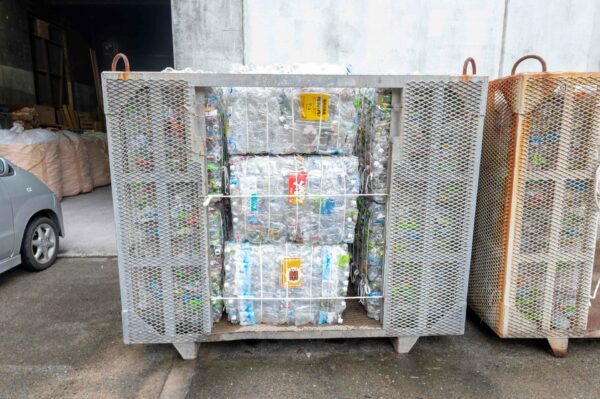
Maintaining a system that ensures the stable transport of recyclables to the mainland guarantees that materials sorted by residents are properly channeled into recycling streams. The baler has become a vital piece of equipment supporting the region’s overall resource circulation:
- PET bottles: Approx. 38–40 bales/month
- Monthly processing volume: Approx. 760–800 kg
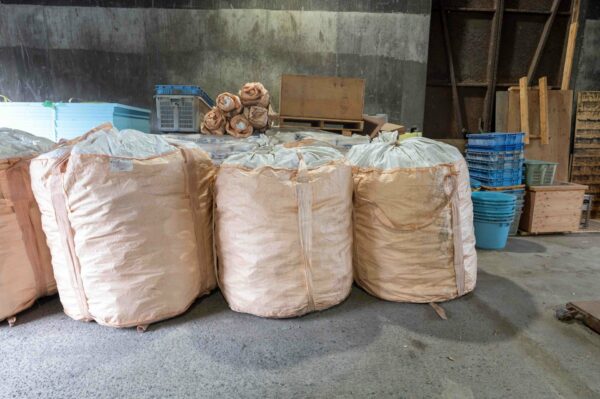
PET bottles that would otherwise fill approximately 42 large industrial bags, so called Flexible Intermediate Bulk Containers (FIBCs), can be reduced to just three bales. This not only significantly cuts down on storage space but also enables the efficient use of limited yard space, contributing to a major improvement in transport efficiency.
Towards a Circular Society Tailored to the Island’s Realities
To ensure our beautiful natural environment is passed on to future generations, Niijima Village aims to further promote resource circulation and reduce the volume of waste sent to final disposal. As part of this effort, it intends to expand the practice of transporting more types of waste off-island, thereby decreasing the amount of waste landfilled at the final disposal site.
Volume reducing balers are far more than mere equipment. Serving as vital infrastructure that enables the efficient use of limited land, and facilitating resource recycling, they play a crucial role in supporting an island’s sustainable development.
Image source: Orwak Japan