


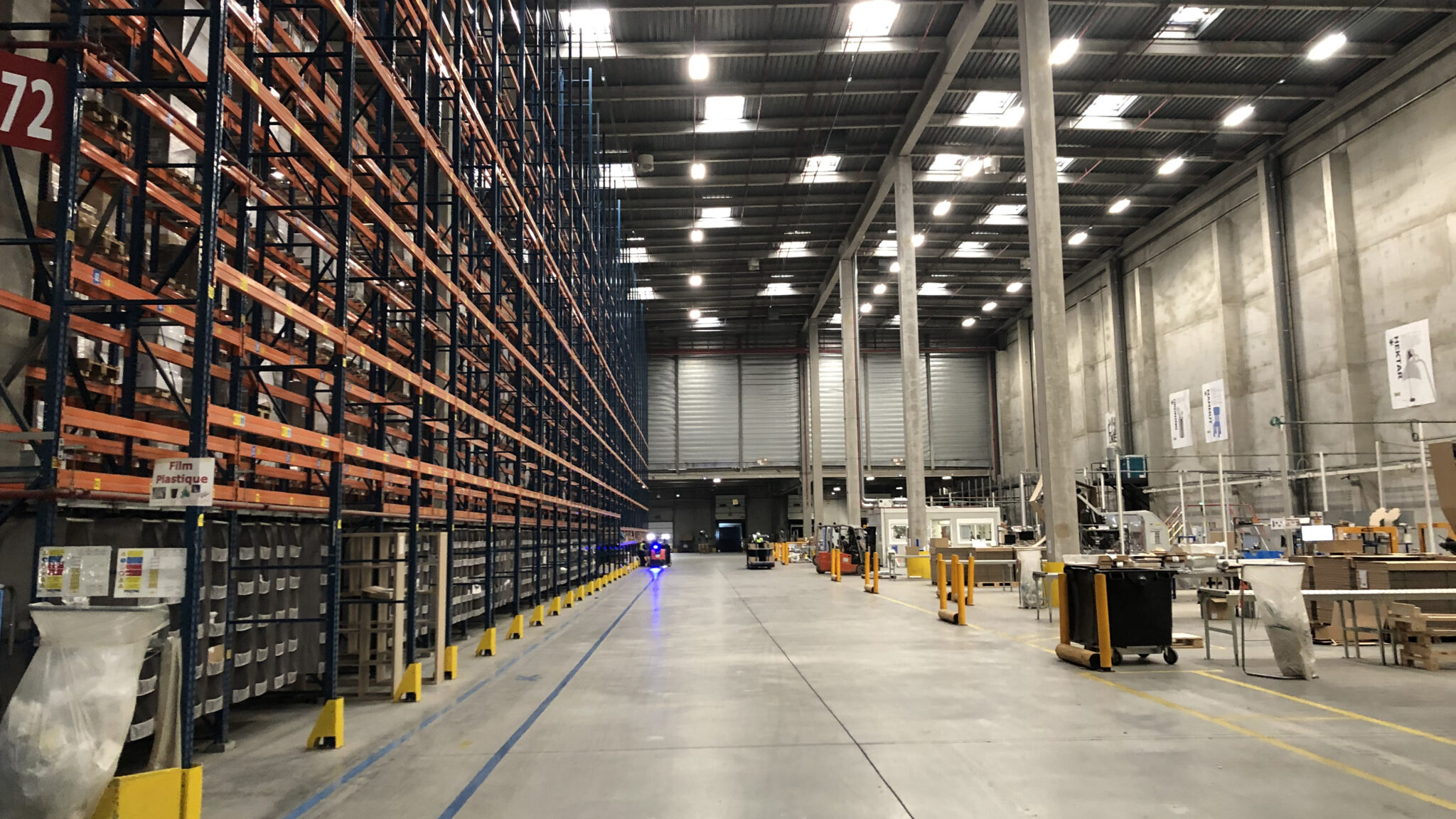
How you handle the waste at your warehouse and logistics center can make a big difference in cost and time. For the most efficient and cost effective waste management, it is highly recommended that you sort all your waste and separate it in different fractions. Depending on the type of waste you deal with, there are solutions optimized for your situation.
The most frequent waste types managed in warehouses and logistics centers are cardboard, dry mixed waste destined for incineration, plastic foil and wood, in that order. As different waste solutions are suitable for different types of waste, it is important not only to look at the amount of waste, but also at the kind of waste involved. A vital question is what the waste consists of and what fractions it can be divided into.
Corrugated cardboard is the most frequent waste type, but cardboard is not just cardboard. There are different kinds of it and we must also look at the density and determine if it is the one-, two- or three-layer type and to consider the dimensions of the boxes. All these factors matters when recommending the best waste management solution.
Equipment with insufficient capacity is a common mistake
When the waste management solution is not adapted to the type or volume of material, it often results in unnecessary time-consuming waste handling. If the waste compaction equipment in use is not powerful enough to compact the waste, the staff must put in manual labor to compact the waste by hand and foot. They cut boxes open, flatten them and push to make them fit into an overloaded machine or they jump in a container to be able to throw in more packaging waste. The staff does its best to cope with the situation, but it is time consuming and a safety risk in the working environment.
It is quite common that companies use compaction equipment with insufficient capacity for the current volumes of waste. The capacity may have been right in the beginning but the business has expanded and the machines have not been upgraded to keep up with that development.
The optimal solution – sorting at source
Sorting all recyclables and waste directly at the warehouse is the cheapest and most efficient way to handle the waste. Compact each type of waste separately in balers or briquette presses. It minimizes the number of transports, which saves money and is a more sustainable solution. Disposing of all material in the same container or compacting mixed waste in one baler or waste compactor can seem easier, but with the right solution, it does not take more time to sort the waste at source instead. In addition, you do not have to pay any processing fee to the waste collection company to sort the waste, so sorting at source is a cheaper solution.
Today the waste management becomes increasingly digitized and automated, which makes the work to sort waste easier and easier. In some environments where AGV (Automated Guided Vehicles) forklifts bring the waste from the picking station to the compactors, the staff must only make sure to put the right type of waste into the right bin at the picking station, the rest is handled automatically.
Different compaction solutions depending on the conditions on site
The goal when a new waste solution is planned for a warehouse or logistics center is primarily to save as much time, and thus money, as possible. It is also important to free valuable floor space, so that the regular operation runs smoothly without disturbance. Therefore, in addition to the waste itself, it is essential to look at the whole picture – the conditions at the premises.
The internal logistics must be taken into consideration; how far the waste has to be transported to a central waste station. If it is a long way, it is preferable to place balers or briquette presses, provided that there is room for them indoors, at the picking stations to avoid spend unnecessary walks or drives back and forth with the waste.
Vertical balers for medium to large volumes of packaging waste
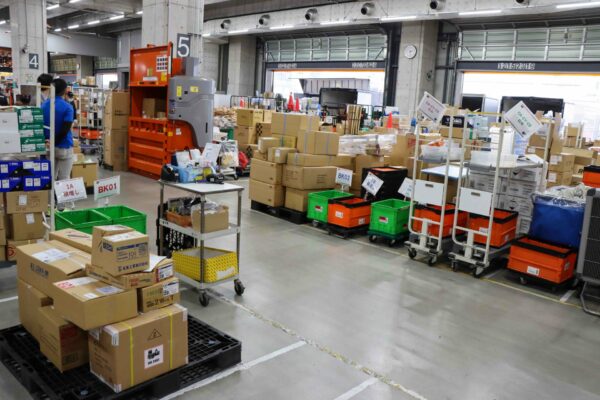
Vertical balers come with a relatively small footprint and conveniently fit next to the unpacking/packing stations.
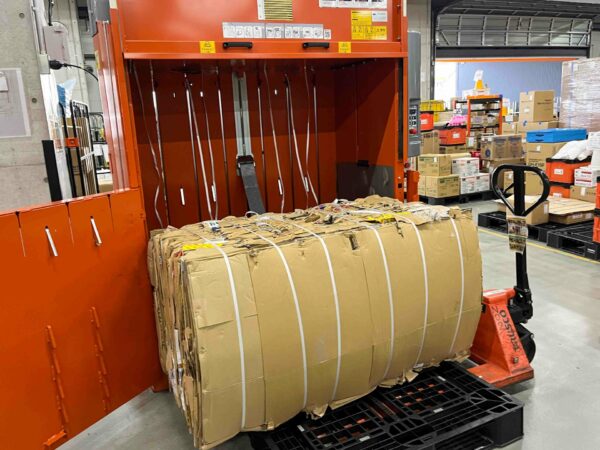
The big POWER baler 3820 with extra wide loading gate for big and bulky packaging waste
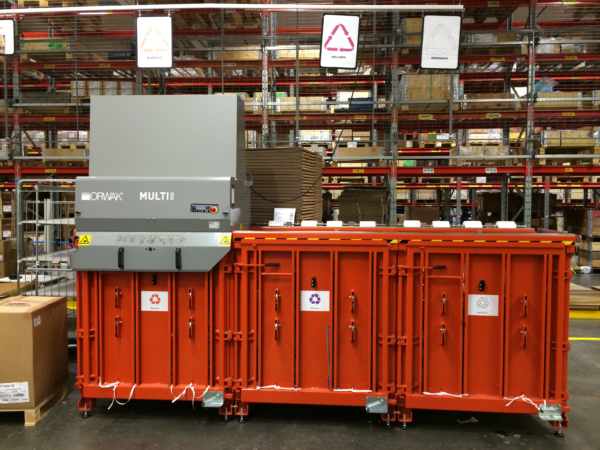
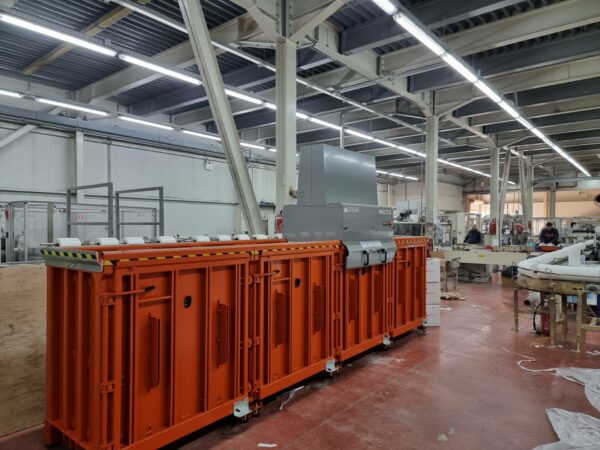
Multi-chamber balers form practical indoor mini recycling stations for different waste fractions
Automated compactions solutions for
substantial volumes
For really large volumes of recyclables, fully automated compaction solutions are most effective and can be integrated as a significant link into the internal logistics system.
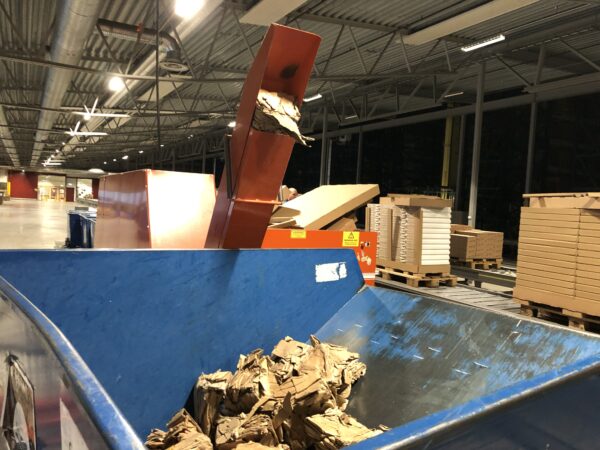
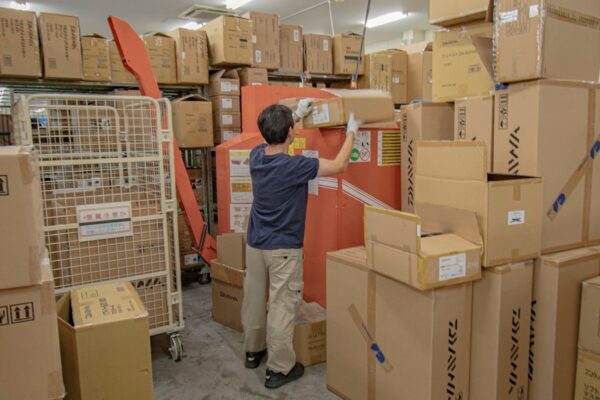
Brickman briquette presses installed next to the incoming goods conveyor belts and work stations
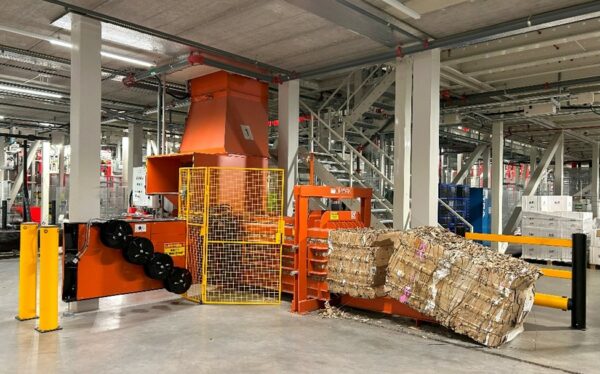
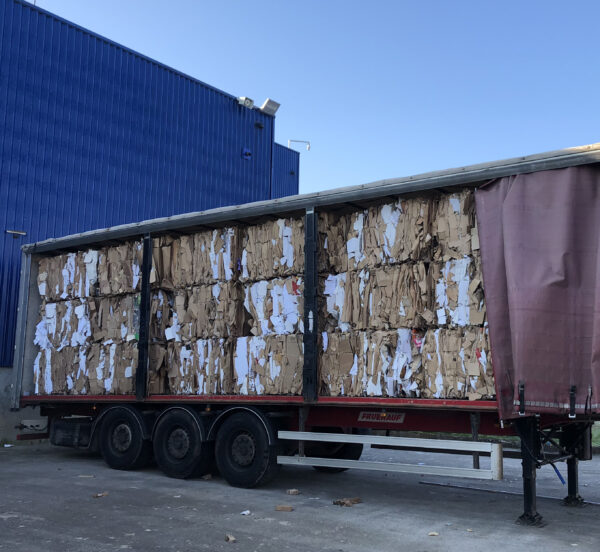
Horizontal balers can be loaded through chutes and automatically compact, cut and bind mill-size bales
When the waste is compacted at source in the warehouse, there will be significantly fewer internal transports, when bringing the dense bales or briquettes to the central waste station or collection point for the waste management company. This saves both time and money!