



Farms, commercial nurseries, and garden centers generate massive seasonal volumes of plastic pots, trays, and transport carts. When left uncompacted, this bulky packaging waste takes up valuable storage space, inflates hauling costs, and often ends up in landfills or incinerators, rather than being recycled, if not sorted and handled properly at source. While the holiday season represents the second-largest sales peak of the year for garden centers in Europe and North America, installing an on-site baler allows facilities to compact plastic waste at the source and keep the waste streams under control!
Industry studies indicate that European growers and retailers handle hundreds of thousands of tons of plastic trays each year. During major spring and early summer deliveries, uncompacted plastics accumulate rapidly creating sudden bottlenecks where it piles up faster than waste haulers can collect it.
Christmas is the second-largest sales peak creating a sharp, surge in plastic transport trays, small grower pots, and protective sleeves. While spring brings larger outdoor containers, the November–December holiday rush moves millions of high-turnover indoor plants in a matter of weeks -and often generates more immediate back-of-house plastic waste per square meter than spring sales.
Why the Holiday Rush Creates a Distinct Plastic Surge
- High-density, small pots trays: Holiday bestsellers such as hyacinths, amaryllis, cyclamen, and mini-conifers ship in small 6 cm to 14 cm plastic pots packed tightly into multi-cell thermoformed transport trays.
- In-store repotting into gift arrangements: Customers rarely buy holiday plants in plain nursery pots. Staff constantly unpot plants to combine them into tabletop arrangements, leaving behind instant piles of empty plastic pots and trays in the work area in the back room prep areas.
- Cold-weather transit packaging: Because tropical holiday plants are highly susceptible to frost damage, winter deliveries require extra layers of protective plastic sleeves, heavy pallet stretch wrap, and thermal liners.
- Severe backroom space constraints: With retail floors and greenhouses packed to full seasonal capacity, back-of-house storage space is at a premium, leaving almost no room for loose, uncompacted packaging waste.
Although reduction and reuse are important, the focus for handling the large volumes of plastic horticultural waste remains on recycling.
Balers provide onsite compaction
Crushing pots, trays, and stretch wrap and empty soil sacks into dense bales can reduce waste volumes by up to 80–90% cutting hauling frequency, saving storage space, and improving recycling quality and bales stack neatly on pallets:
- Lower disposal hauling costs: Loose pots, trays, and sacks are mostly air and fill containers quickly. Dense bales mean fewer pickups and lower transport cost.
- Reclaimed storage space: Stackable bales free up floor space in backrooms, yards, and greenhouses
- Improved recycling rate: Sorting and baling clean, uniform plastics makes material easier for recyclers to process and may generate an income or at least a rebate.
- Cleaner, safer working environment: Bales reduce loose litter, windblown plastic, trip hazards, and fire risks in storage areas.

Orwak provides a broad range of vertical balers designed for plastic compaction. Multi-chamber balers like the models MULTI 5070-HDC and 9020 form mini recycling stations for sorting different waste types in clean fractions in the same machine. The standard single chamber balers in the COMPACT and POWER ranges come with a material selector and a special plastic mode for effective compaction of bulky waste containing a lot of air.
Successful baler installations in the UK and in the Middle East
Brimsmore Garden Centre in the UK successfully use the COMPACT 3150 for cardboard, pots and trays and empty compost bags. This baler, installed by Orwak Easi UK, is the second biggest of Orwak’s single-phase balers. It is big enough to cope with large boxes but small enough to switch between different waste streams on regular rotation to avoid stock piling too much of each material.
The results speak for themselves. All seven large sacks of empty compost bags were compacted into just one bale, and the space saving alone is compelling:


So, as well as helping them reach their environmental goals, the baler is enabling them to regain valuable space in their yard as they will also be removing the large cardboard skip, have less waste lorries turning up and disrupting their site and they have future proofed budgeting for the costs of recyclable waste.

Brimsmore Garden Center in the UK A farm in Dubai
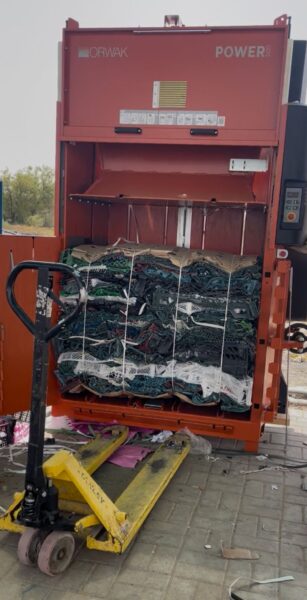
In warmer climate zones farming and gardening continues many months or year-round. One recent example is the high-capacity baler POWER 3420 installed at a farm in Dubai by Orwak’s sister company Sulo Middle East. Damaged plastic crates are a common challenge at farms, fresh produce operations and fruit & vegetable distribution centers in the region. The Orwak baler turns damaged crates into a manageable, compact, and more efficient waste stream.
Do you want to know how an Orwak compaction solution can improve waste management in your business? Contact us for advice!