


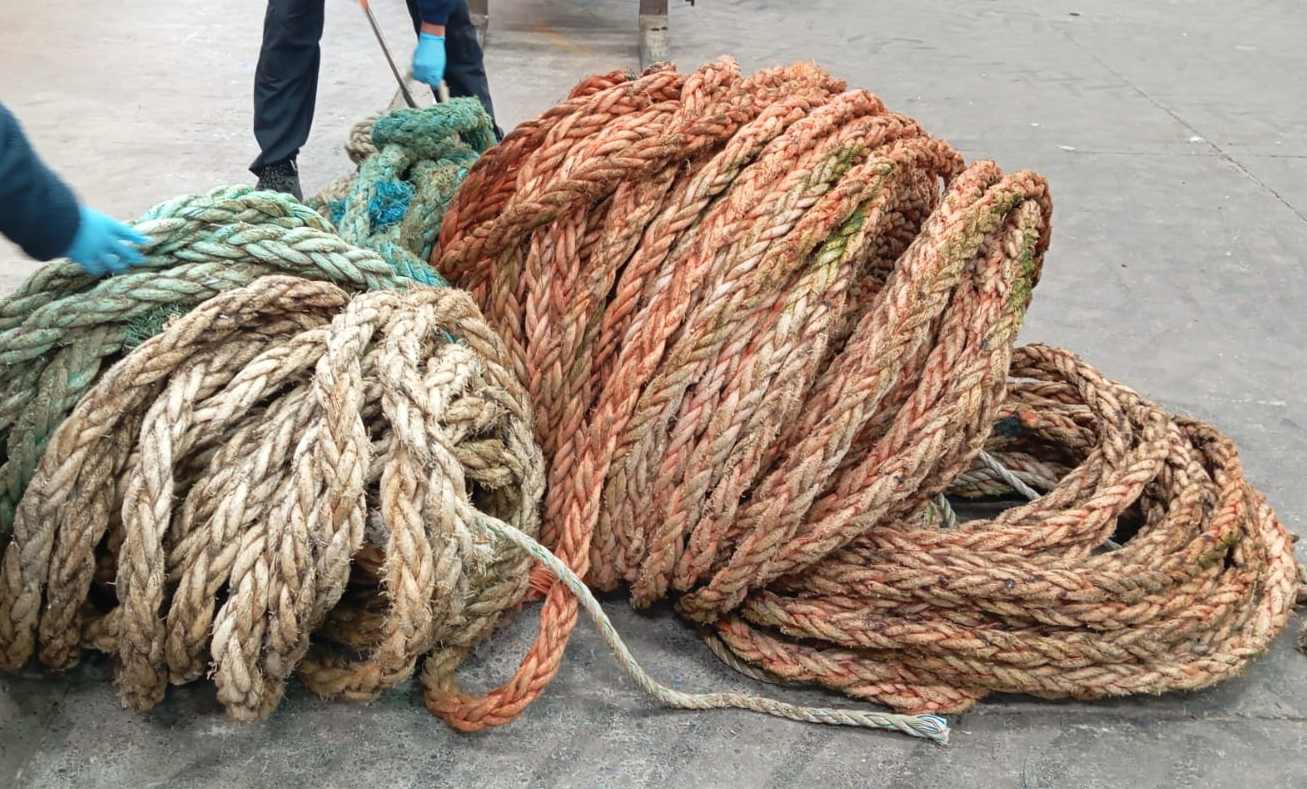
Ocean plastic is obviously a major problem, because it does not break down easily, it hurts marine life and has a negative impact on entire eco systems. Yet, it is a challenge that engages people resulting in local initiatives as well as large scale ocean plastic harvesting projects led by specialized international organizations. Used fishing gear, such as ropes and “ghost nets”, can be successfully collected and recycled or upcycled into useful items. It should be a sustainable process in every step and to optimize transport logistic from the sea to the recycling plant: use a baler!
Ocean plastic is an urgent global threat to marine eco systems. The massive volumes – some reports suggest that about 11-14 million tons of plastic enter the world’s oceans every day – combined with the fact that plastic takes hundreds of years to degrade, makes it extremely challenging.
Millions of tons of “ghost gear” disrupt marine life
Millions of tons of “ghost gear”, lost or abandoned plastic fishing nets, lines and ropes from the fishing and shipping industry float through the water. Sea animals like turtles and dolphins get entangled or may mistake colorful pieces of plastic for food and digest it.
The fight against ocean plastic pollution relies partly on harvesting plastic already in the ocean and partly on stopping new waste at the source, like intercepting plastic in rivers and implementing strict international policies.

Harvest ocean plastic and turn it into something useful
Different methods are deployed when harvesting plastic and floating barriers are nowadays often utilized. They move with ocean currents or are towed and guided by support ships to funnel plastic – mainly discarded commercial fishing nets – into central collection areas, where the plastic is hauled onto boats for sorting and recycling.
Ocean plastic can be recycled and upcycled into a wide variety of consumer goods such as clothing, furniture, product packaging and even cool outdoor recreation gear like skateboards and surf fins!
The quality of harvested plastic is another challenge. A lot of plastic retrieved from the open ocean is affected by UV light and sea salt making it brittle and degraded. It is difficult, or even impossible, to recycle plastic of such poor quality. However, sturdy ropes and commercial fishing gear are designed to be durable at sea and can in many cases be rescued and turned into something valuable. When taken ashore, the plastic must be transported to the recycling plant and to optimize logistics, reduce volume by compacting and baling it! Two real life examples from the Orwak world:
BlueCycle in Greece compacts fishing net in Orwak Power baler
The Greek company BlueCycle converts fishing nets into raw materials for 3D printers. It is a remarkable initiative to clear the sea and the shores from plastic and at the same time find a sustainable and profitable solution for it! The goal is to create new, high-quality material for production of useful items and to promote a holistic approach to the ocean waste problem. BlueCycle uses a high-capacity Orwak baler to compact fishing nets into dense bales, which can be stored and handled easily.
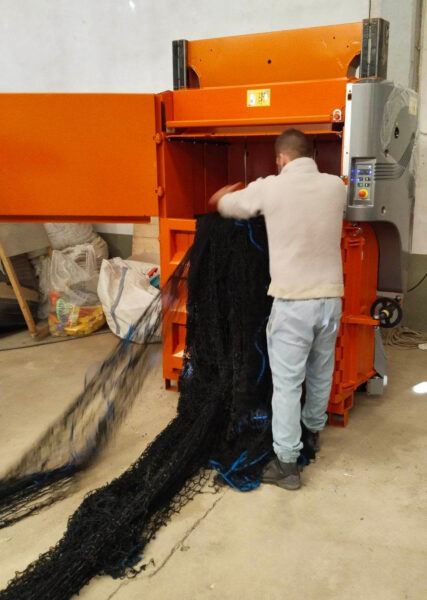
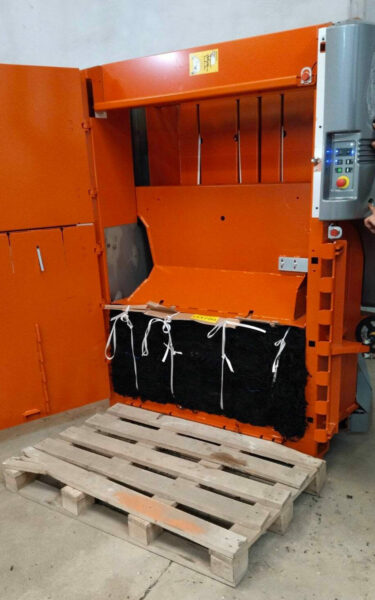
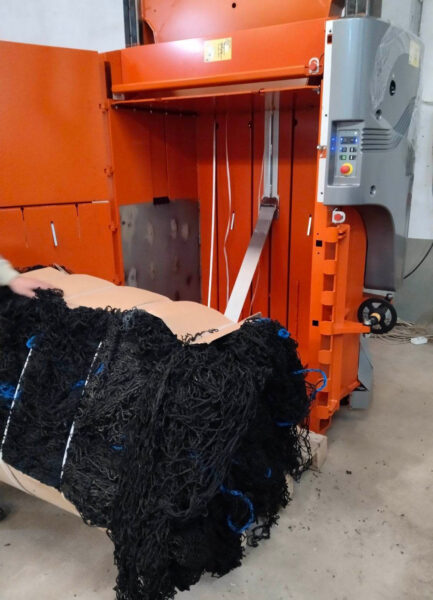
BlueCycle’s lab in Piraeus is the first facility in Greece for processing and recycling plastic equipment deriving from fishing and shipping. BlueCycle required an efficient solution to compact the big volumes of collected fishing nets and Alpe-Tech, Orwak’s Greek distributor, supplied them with an Orwak Power baler. The model 3325 has the right size and capacity and the regular swing door is helpful when loading the baler with armfuls of bulky fishing nets. BlueCycle is especially happy with the ability to stack the bales on top of each other to save space.
Unique 3D printed items made from marine plastic
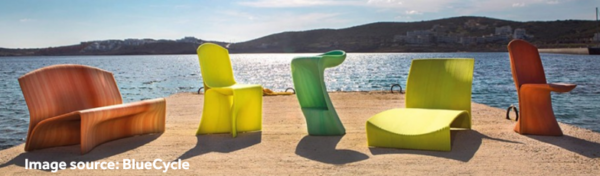
BlueCycle utilizes a certified procedure to transform marine plastic into pellets, which will be fed back to the plastic industry and into recycled 3D printing filament. The materials used in the production are 100 % recyclable and 100 % circular plastics. The furniture and ornaments serve as a stunning example of how digital design and production technologies can be applied to fight marine plastic pollution.
The designers look to the sea for inspiration when designing the furniture. With the use of robotic 3D printing, all the products are digitally crafted from upcycled marine plastic. Every item is unique and a true symbol of circular economy and how to turn waste into value!
Chilean sea rope recycler Atando Cabos benefits from Orwak big baler
The clean tech company Atando Cabos in Chile invested in the heavy-duty baler Orwak 3500, doubles the loads of recyclables sent to its plants thereby lowering the transport costs and reducing the carbon footprint by 33 %.
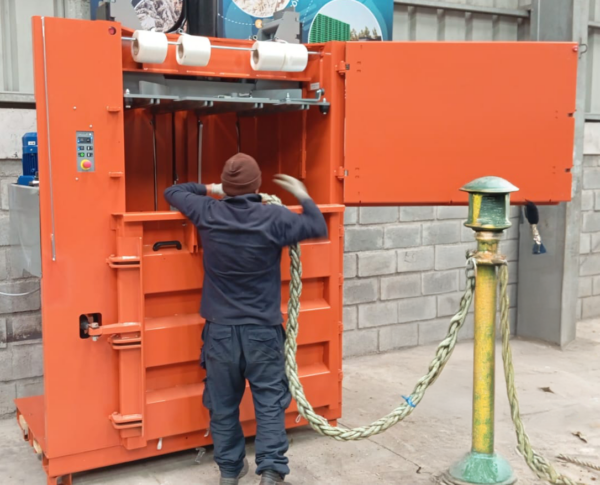
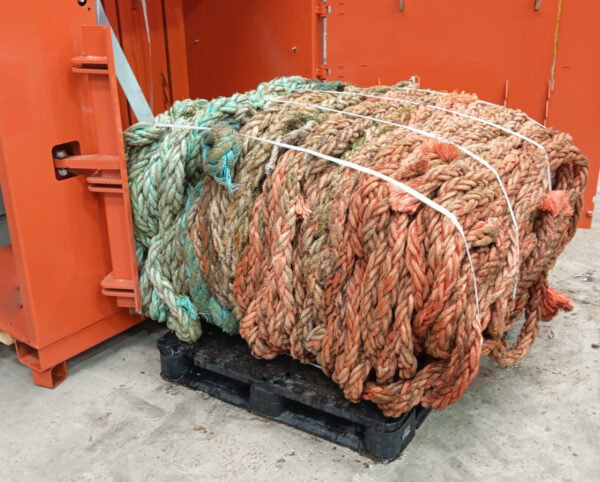
Atando Cabos, with the motto “cleaning up the world using plastic as a tool”, recycles for instance ropes and nets from the sea and the fishing industry to produce new products such as plastic pallets and composters. It is a clean tech company developing collaborative technology solutions to turn massive volumes of plastic waste into new raw materials and products.
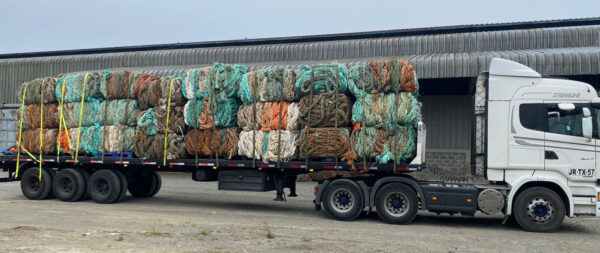
To increase the tonnage of recyclables shipped to the plants, the Orwak distributor SULO Chile recommended the 50-ton baler Orwak 3500. This model was chosen primarily for its power and bale dimensions:
“To double the weight in each shipment, we needed each bale of ropes to weigh at least 520 kg, and this one meets the requirement. The main benefit for us is that the loading capacity increased by 50 % leading to a reduced carbon footprint, associated with transportation, and a reduction in time and energy spent loading and unloading.”