


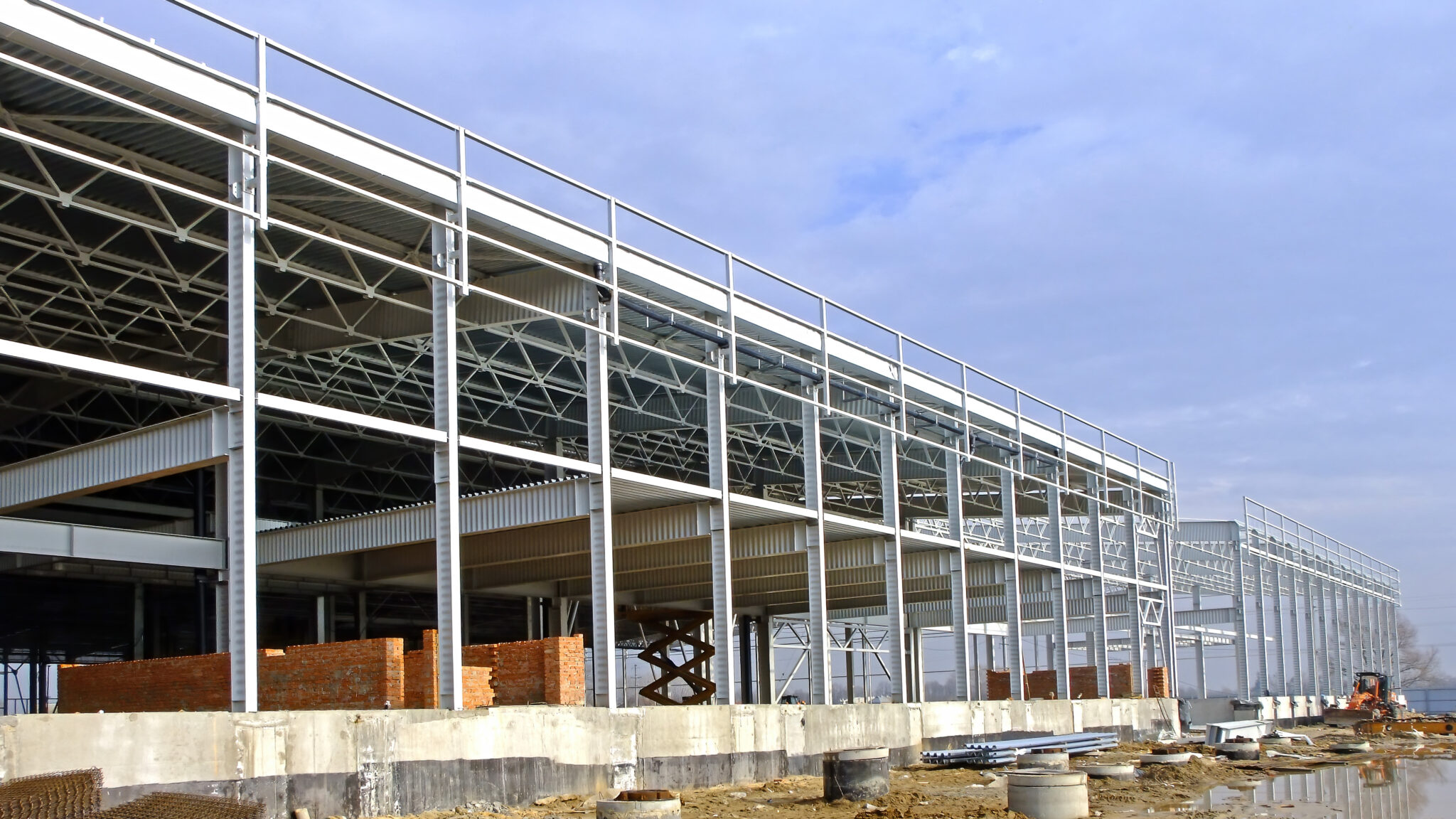
It is important to include waste management in the plan at an early stage when building new or rebuilding existing warehouses and logistics centers. If it is initiated late in the process, mistakes are easily made, or worse – it can be forgotten about until the building is ready, which can lead to expensive and ineffective solutions that also affect the working environment in the warehouse.
Unfortunately, there are quite a few examples of how waste disposal can be lost in the process, planned late or simply down prioritized.
Optimal waste solution no longer an option late in the process
Building new or extending a warehouse or logistics center is obviously a big, comprehensive and complex project and the primary focus is on the core business; the inbound and outbound delivery of goods; the amount of goods to handle, where to unload and unpack incoming goods and where to pack and dispatch the outgoing.
What quantities of packaging material they must handle and where those are generated can be forgotten. That approach creates poor conditions for optimal waste management and frequently results in special solutions that become unnecessarily expensive, partly because it becomes much more expensive to develop non-standard solutions and partly because a lot of work time is spent on waste handling.
The main cause of expensive and ineffective waste solutions is that thoughts about how to manage the waste streams and organize the waste logistics from the warehouse come in too late in the construction process. When that is the case, the waste solution must be adapted to what is already built, which means that the best solutions are no longer an option.
Whether a new warehouse is built or an entire business including the warehouse is moving to a new location, the decision is often taken on a high level in the organization. It happens that the warehouse moves into a building originally intended for other purposes. It could be that management is unaware of exactly how the staff handled unpacking, handling, transportation and disposal of waste in the old building, or does not take the optimal waste solution for this specific warehouse into account.
Insufficient capacity means less productive use of time
If the waste solution is under-dimensioned; the machines do not have sufficient capacity for the amount of waste in the business or the loading gate of the machine is too small for the warehouse staff to easily get rid of all the waste. As a result, warehouse and logistics staff must spend a lot of time on something that should actually go fast and smoothly.
To spend that much time on manual work and on waiting for the machine to process the waste and get ready for the next load, is not a sustainable solution in the long run. It is important to choose waste handling equipment with the right capacity. The warehouse staff should be able to effortlessly drop the packaging material into the machine and then just walk away and forget about waste!
Dagab logistics center – a good example of planning ahead
Dagab is a food retail company in Sweden and as part of Axfood, it is responsible for the group’s product range, purchasing, warehousing and distribution. It ensures sustainable and efficient product supply to store chains but also to e-commerce customers. A new modern logistics center, the size of 10 football fields, was built north of Stockholm. It is equipped with five horizontal balers strategically located in different departments indoors to cope with the streams of cardboard packaging and outdoor compactors for other waste fractions such as specific types of plastic, wood and organic waste.
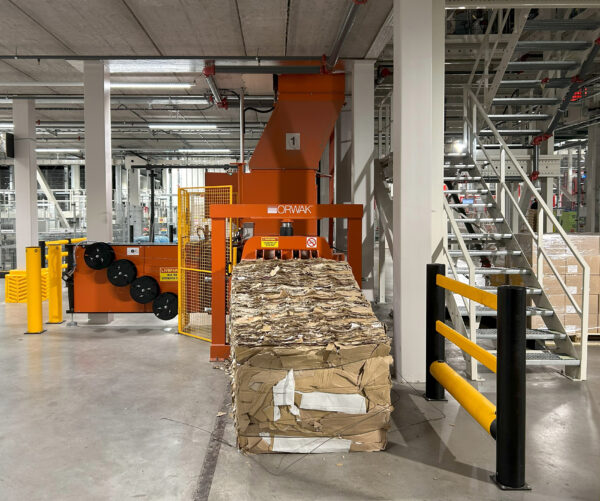
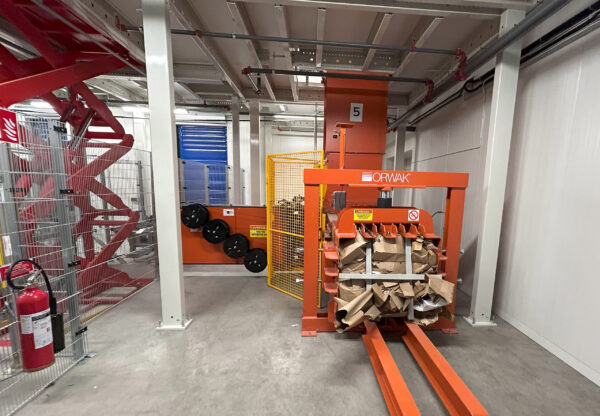
The automated areas of the system, where a lot of waste is generated, were a big challenge in the design phase of the construction project. Johan Rösler, project manager for the new center, commented: “We had to find a smart solution to integrate the waste handling in the automated processes.”
In projects of this magnitude, it is important to think about the internal processes for material and waste handling early in the process and that was a fact with ATS-Orwak, Orwak’s sister company and representative in Sweden, in this case.
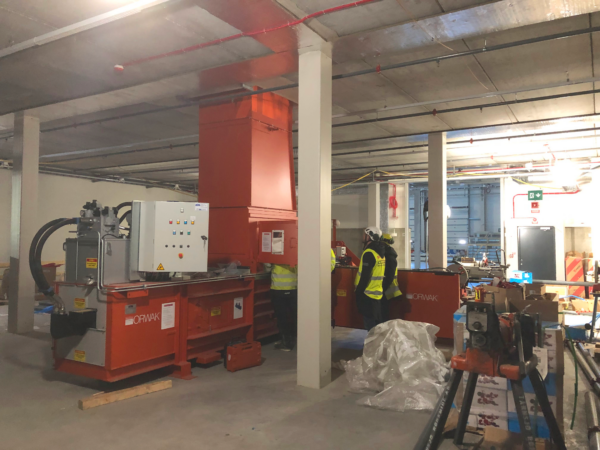
Project manager Johan Rösler commented: “ATS-Orwak was involved early in the design process to achieve a good overall solution and together we chose this waste solution that is efficient, sustainable and minimizes internal transport. Considering the conditions on site, the high degree of automation, and the big volumes of packaging waste, we determined that this is the best solution.”
If you are planning to rebuild, expand or move a warehouse or distribution center, please contact Orwak! We are happy to guide you to the optimal waste management solution for your business.